Overview
From spreadsheet to searchable library.
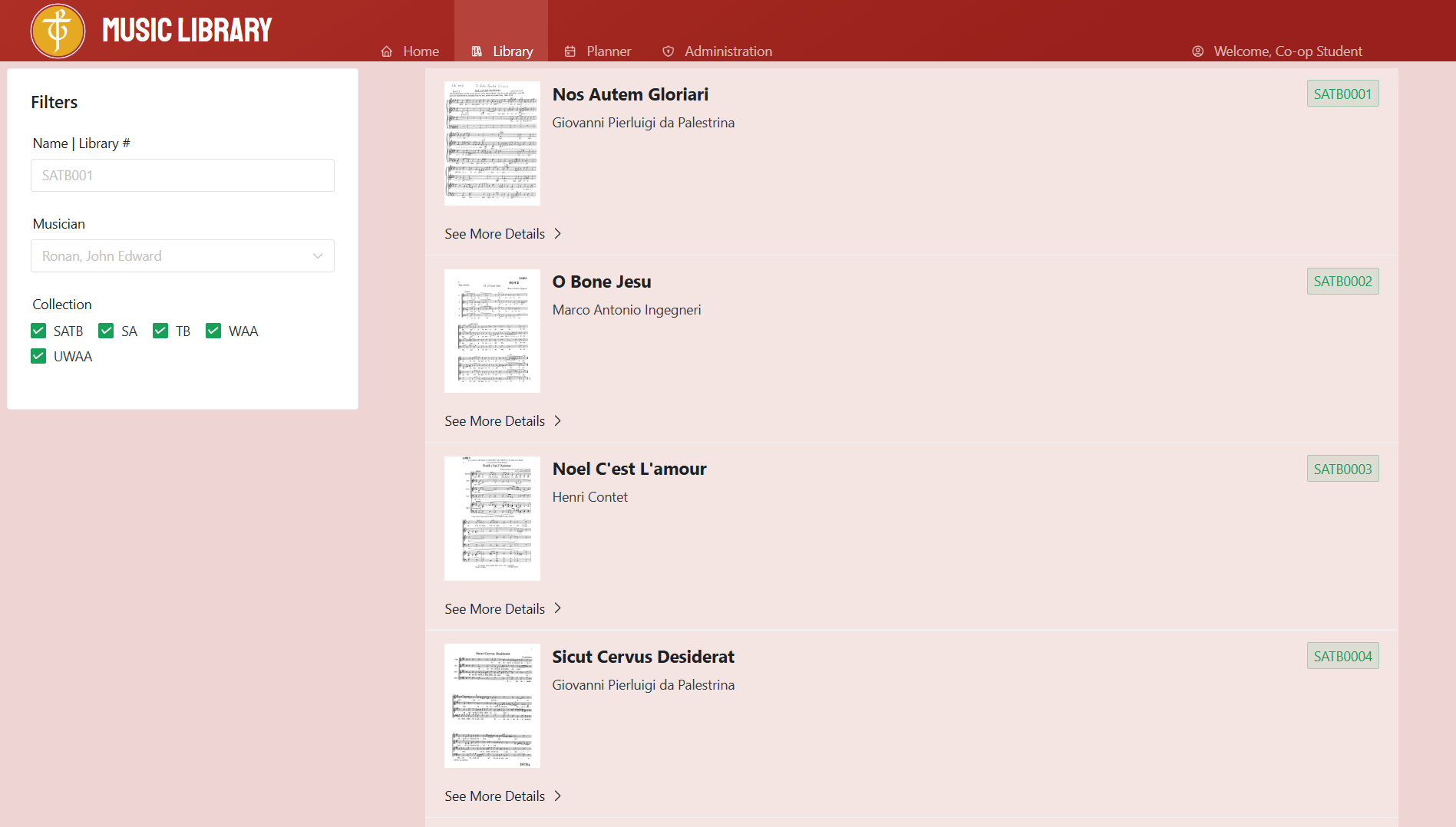
The goal of this project was to digitize a school music library that had previously been managed through a spreadsheet. The finished application makes the collection easier to explore by allowing users to find and sort music by collection, title, composer, and other useful information.
I built software to parse the spreadsheet’s existing data and convert it into a structured music-library database. This process gave me practical experience working with SQL and data structures, including linked lists, while also developing the front end used to browse and view the collection.
Turning the spreadsheet into a useful application required more than transferring rows into a new format. I had to consider how compositions, composers, collections, and related details should connect so that the information could be stored consistently and retrieved efficiently. The resulting structure supports both broad browsing and more focused searches without losing the detail contained in the original records.
I also worked across the full path from data processing to the user interface. That meant preparing the source information in Python, designing and querying the SQL database, building the endpoints that connect the application to its data, and presenting the results in a clear, sortable library. Working through each layer helped me understand how decisions made in the database affect both back-end logic and the experience of the person using the site.